
For many parents in Ontario, the question isn’t just if their kids should learn to ski or snowboard, but when is the right time to start.
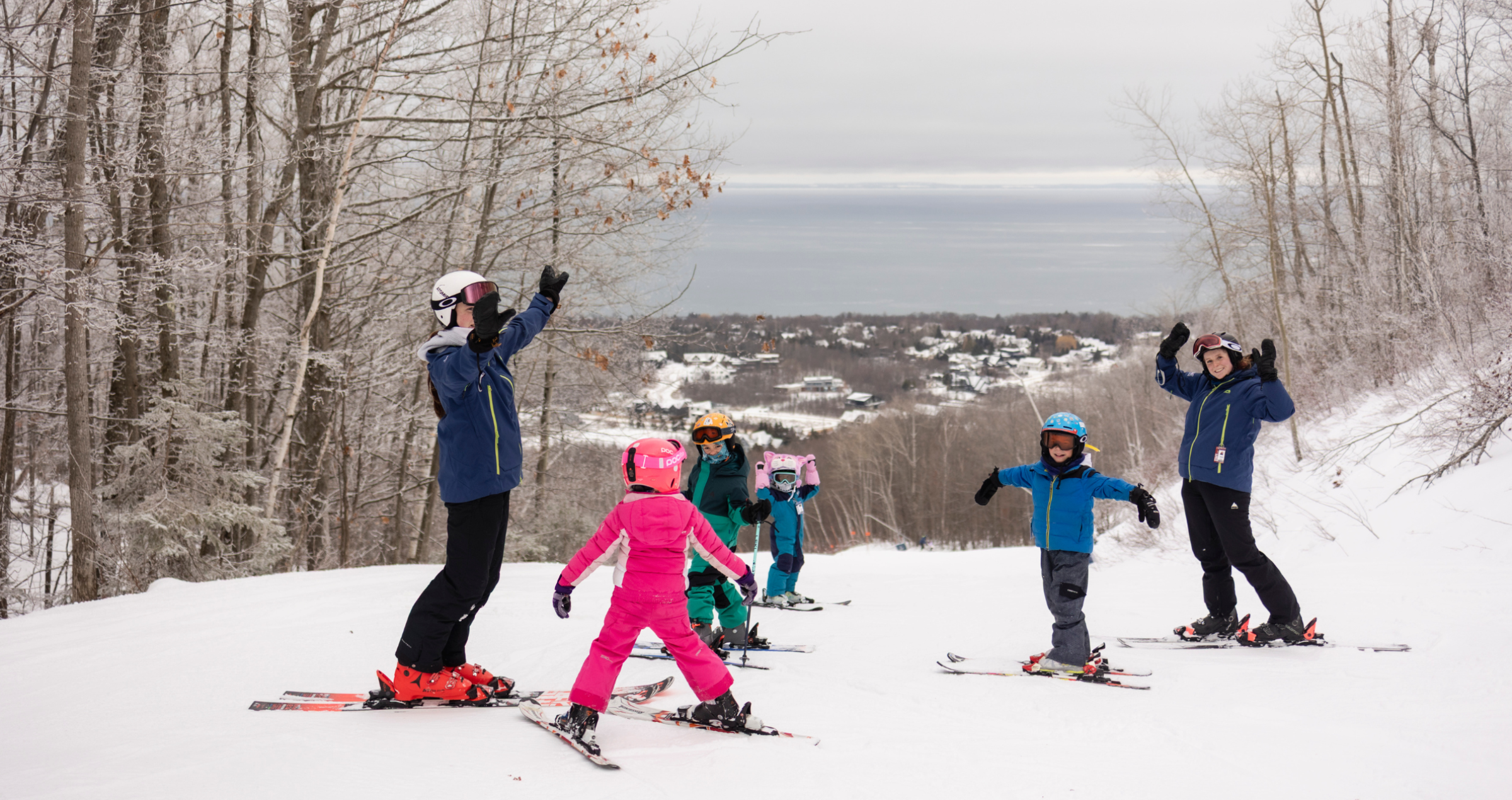
Children can begin learning to ski at a surprisingly young age. While every child develops differently, Alpine Ski Club’s programs welcome children as early as 3 years old, when they are comfortable in winter clothing, can follow simple instructions, and are ready to explore movement on snow in a playful environment.
What is the best age to start skiing?
There is no single perfect age to start skiing. Many children begin between 3 and 7 years old, but the right time depends more on a child’s readiness than their exact age.
Around age 3, children can often begin learning through short, playful lessons focused on getting comfortable in ski boots and equipment, moving on snow, and learning basic balance. As children get older, they are generally able to follow more instructions and spend more time practicing turns, stopping, and controlling their skis.
By 5 to 7 years old, many children are ready for longer lessons and can begin developing more consistent skiing skills. However, starting later does not put a child at a disadvantage. Children learn at different rates, and a positive first experience is more important than starting at a particular age.
At any age, early ski experiences are about creating a love of winter, spending time outdoors, and making skiing something children look forward to every season.
How long does it take a child to learn to ski?
There is no set number of lessons it takes for a child to learn to ski. Some children may be comfortable stopping and making basic turns after a few lessons, while others may need more time and practice.
For a young beginner, early milestones typically include learning to stand and move on skis, stop safely, control speed, and make basic turns. Once children are comfortable with these skills, they can gradually progress to riding lifts and skiing longer or more varied terrain.
How quickly these skills develop depends on factors such as age, previous experience, how often they ski, and how comfortable they are on the snow. Regular opportunities to practice can help skills develop naturally over time.
Rather than focusing on how quickly a child reaches the next level, focus on whether they are becoming more comfortable and enjoying their time on the hill.
Should kids learn to ski or snowboard first?
Both skiing and snowboarding are great lifelong sports, but younger children often find skiing easier to learn first because each leg can move independently, making balance and mobility more intuitive. Many families choose to introduce skiing first before trying snowboarding as children get older, although the best choice ultimately depends on your child’s interests and goals.
What should my child wear for their first ski lesson?
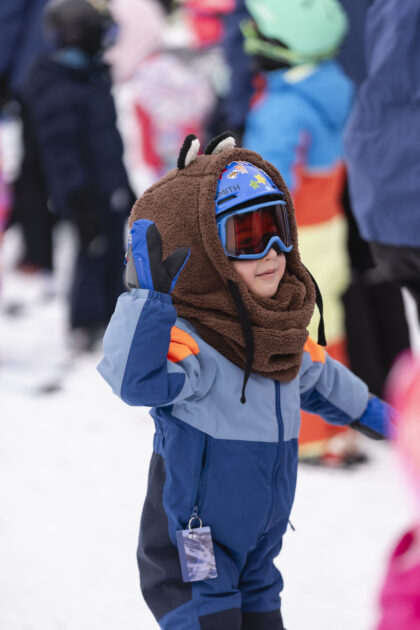
The key to a successful first ski lesson is staying warm, dry, and comfortable. Dress your child in waterproof snow pants and a waterproof winter jacket, along with warm base layers, ski socks, waterproof gloves or mittens, and a properly fitted helmet. Goggles are also recommended to protect their eyes from wind, snow, and bright winter conditions.
Avoid bulky clothing, which can become cold if it gets wet. Instead, choose breathable layers that can be added or removed as the weather changes. Long underwear are great for skiing so there are no bulky pants tucked into the ski boot. Ensure that there are no bumps or wrinkles in their ski socks when they put their ski boots on. This can quickly become uncomfortable!
A child who is warm and comfortable is more likely to stay focused, build confidence, and enjoy their first day on the slopes.
Why does the learning environment matter?
Where children learn to ski can be just as important as when they start.
Young skiers are still developing balance, coordination, and awareness of their surroundings. A supportive learning environment gives them the space to practice these skills without feeling overwhelmed.
At Alpine Ski Club, instructors use play, repetition, and encouragement to help young skiers become comfortable on the snow and develop their skills.
Less crowded slopes can also provide an important safety advantage. With fewer skiers and snowboarders sharing the hill, children have more space to practice stopping, turning, and controlling their speed. Parents can also feel more comfortable knowing their children have room to learn without navigating heavy traffic on the slopes.
Learning to Ski at Alpine Ski Club
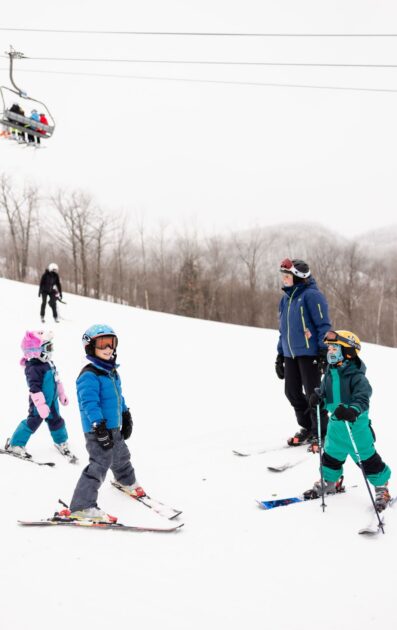
At Alpine Ski Club, children can begin their skiing journey through age-appropriate programs designed to build confidence, skills, and a lifelong love of skiing. Many of our youngest members grow from first turns on beginner terrain, to advanced or competitive programs over the years, supported by experienced instructors and a welcoming family environment.
For many families, learning to ski is more than picking up a new sport; it’s the beginning of a lifelong winter tradition.